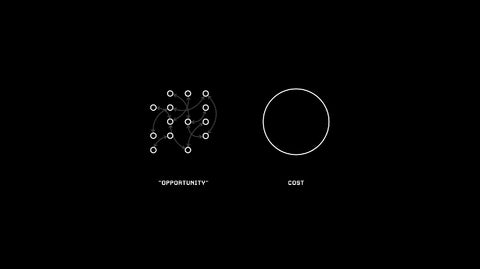
AI made code nearly free. But the willingness to commit to an idea, face rejection, and keep going? That still costs everything. The new scarce resource isn't technical skill — it's conviction.

Stop building for imaginary users. Get one real person to pay you. One customer proves the mechanism works and changes your entire psychology.
People don't buy products. They buy transformations — from stuck to unstuck, from slow to fast, from confused to clear. Stop listing features. Start selling outcomes.
Vibe coding feels like progress. Ship an app, start another, ship again. But building without selling is just expensive journaling. The trap is mistaking motion for progress.
In the AI era, anyone can ship a product. What you can't fake is proof of work — the public trail of thinking, building, and learning that earns trust.
Anyone can prompt AI to build an app. The hard part is knowing what's worth building, who it's for, and why they should care. Judgment beats execution.
Shipping is not the finish line. It's the starting line. The real work begins after you deploy — and most vibe coders never do it.
AI made building easy. Distribution is still hard. If you have an audience, you can sell anything. If you have a product and no audience, you have a hobby.
The market doesn't see your code, your architecture, or your clever prompt engineering. It sees your ability to communicate what you built and why it matters.
You built an app with AI in a weekend. Congratulations. But an app without a customer is a hobby, not a business. Here's what actually matters.
AI collapsed the cost of making things to zero. But meaning, taste, and point of view can't be automated. The new creative advantage isn't execution — it's judgment.
Building without selling is expensive journaling. The market doesn't grade on effort — it grades on exchange. Distribution is the hard part. The product is the easy part.
Einstein called compound interest the eighth wonder of the world. He was wrong. It's the first.Everything compounds now.Money compounds at...
Everyone treats failure like a disease. Something to avoid, cure, or hide from others.This is backwards.Failure isn't what happens when...